In the early years, the Arizona Canal ran along Arcadia's southern edge. The first tract platted here, Citrus Homes, was recorded in June 1915 with 25 long lots, each running south to the canal's bank. The canal was right there. But most of the land that became Arcadia sits higher than the canal. According to the Arcadia Camelback Mountain Neighborhood Association's history, the 1919 developers formed their own water company because of that elevation. They built pumping plants that could supply 2,100 acres and had laid 15 miles of underground concrete pipe by 1924.
That decision is more than a century old, and it still shapes your winter. Arcadia's flood-irrigated yards get water through two separate systems, and they don't run on the same calendar. If you know which one serves your property, you can plan your ryegrass, citrus watering and January around it.
A Neighborhood Built Above Its Canal
The original Arcadia tract was split mostly into five- to ten-acre lots meant to be sold as citrus orchards. Orchards need a lot of water, and the land couldn't get canal water by gravity, so the water system had to come first.
Arcadia Water Company is still in business. It's an Arizona nonprofit, incorporated in 1919 to provide irrigation water to its members only. Landowners in the district own the water rights, conditioned on a $100 membership fee plus any charges for water, delivery or repairs. AWC owns the wells, a pumping plant, a reservoir, the main distribution lines and the main diversion boxes. Members or their homeowners associations own and maintain the smaller lines that carry water from those mains into individual subdivisions. An elected 11-person board runs the company, and three seats come up at the annual meeting on the third Tuesday of each April.
The other system is Salt River Project, which delivers residential flood irrigation across the Valley. SRP calls the Arizona Canal the main canal for everything on the north side of the Salt River, and the Grand Canal is supplied from it. So the canal the original developers couldn't use by gravity is the backbone of SRP's Northside system. AWC's October 2026 delivery roster lists addresses from 45th Street to 68th Street. There's no public parcel-by-parcel map showing which Arcadia properties AWC serves, so your bill is the surest way to know which system feeds your yard.
Two Calendars for the Same Winter
SRP's residential schedule changes with the seasons. Deliveries come about every 14 days from April through September and about every 28 days from October through March. On top of that, every fall and winter SRP drains sections of its major canals for cleanup and repairs, and no residential deliveries are scheduled during the dry-up that applies to your area.
These are the SRP dates from now through the end of the winter season:
| Date | What happens | Source |
|---|---|---|
| October through March | SRP residential turns move to about every 28 days | SRP irrigation sign-up |
| Nov. 20 to Dec. 24, 2026 | Southside canal dry-up | SRP dry-up schedule |
| Dec. 6, 2026 | 2027 SRP irrigation bills due | SRP Fall 2026 newsletter |
| Jan. 3 to Feb. 7, 2027 | Northside canal dry-up | SRP dry-up schedule |
| Jan. 7, 2027 | 1% monthly late fee begins on unpaid 2027 balances | SRP Fall 2026 newsletter |
The Arizona Canal is a Northside canal, so for Arcadia yards on SRP water, the January Northside window is the first one to check. When SRP described a past Northside dry-up, it said portions of the Arizona, Grand and Crosscut canals would be drained and some irrigation customers would lose canal water while the work went on. SRP asks residents to check their own subdivision's schedule in My Account or by phone, since dry-up effects depend on location.
AWC works on its own system of wells, pumps and pipe. Its October 2026 roster shows individual turns on Arcadia Drive and Arcadia Lane between Oct. 12 and Oct. 15. The company hasn't posted a current winter cadence or said whether SRP's canal work affects its deliveries. The most recent notice on its site that gives a winter cadence, from 2017, put winter turns at once every 28 days. Members who need certainty for January should call the AWC office.
Why One Flood Turn Won't Carry New Ryegrass
The calendar matters most for overseeded lawns. The University of Arizona Cooperative Extension's overseeding guide calls October the ideal month to seed winter ryegrass into bermudagrass, with daytime highs around 80 to 85 degrees and nights around 55. The same guide says to keep new seed moist by watering three to four times a day for the first 7 to 10 days, then gradually cut back to about once a week as the seedlings take hold.
A flood turn every 28 days can't provide that. A deep soak at seeding helps, but a new ryegrass lawn on flood irrigation still depends on sprinklers or hand watering for the first week and a half. For SRP customers, the January dry-up adds roughly five weeks without canal deliveries, right when an October lawn should be settling into weekly watering.
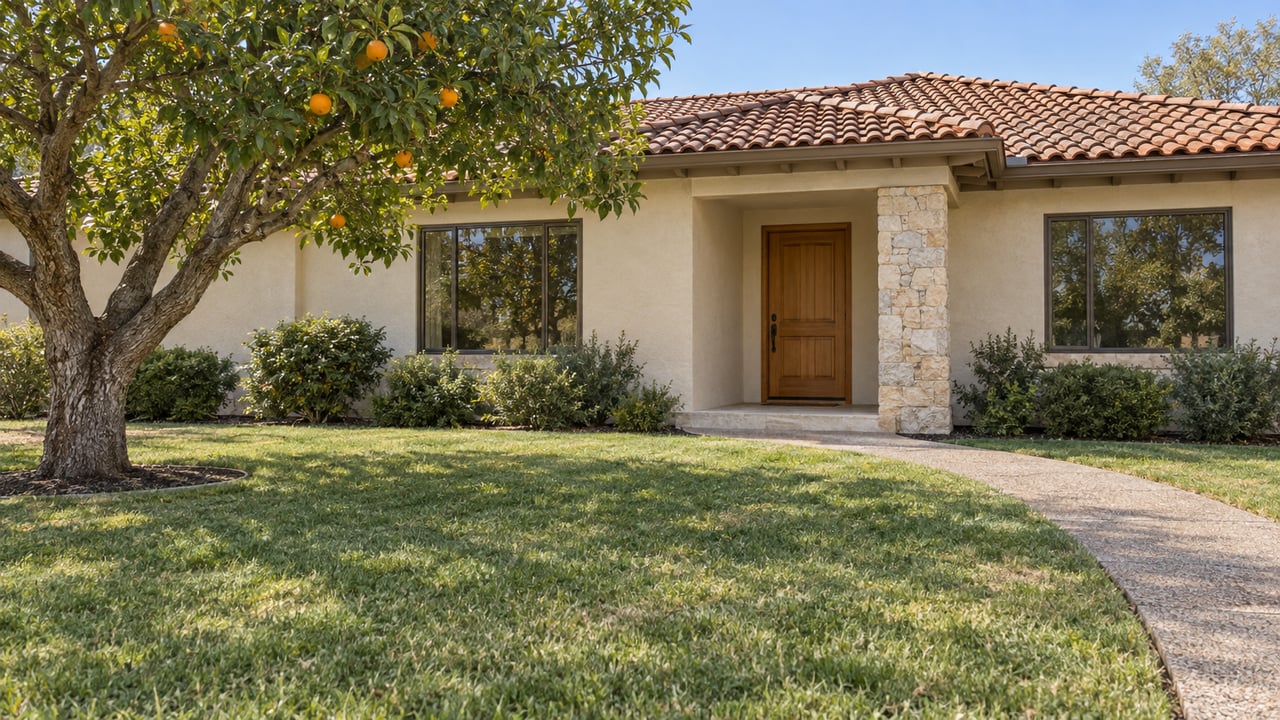
Citrus, the reason Arcadia was laid out in the first place, needs less frequent water. UA Extension's citrus irrigation guidance suggests mature trees get water every 14 to 21 days in October and November and every 21 to 30 days from December through February, adjusted for soil, weather and irrigation method. The guide calls flood irrigation effective for citrus in older Arizona neighborhoods, but trees surrounded by lawn may need extra water to wet the whole root zone. A 28-day winter turn lines up reasonably well with those winter intervals. The pressure points are the fall weeks and any stretch when a dry-up pushes the gap past a month.
SRP's Fall 2026 residential newsletter also calls fall a strong time to plant shade trees such as mesquite, desert willow and palo verde. It notes that deep flood watering encourages roots to grow farther into the soil.
What the 2027 SRP Bill Pays For
SRP's fall newsletter says 2027 bills are coming soon, with payment due Dec. 6. SRP explains that a landowner's water right belongs to the land, and the annual charges pay for storage, facilities and delivery administration, not for the water itself. The 2027 residential charge summary shows modest increases:
- Delivery fee: $97.34 per active account plus $0.47 per acre in 2027, up from $93.87 plus $0.45 in 2026
- Basic stored-and-developed water charge: $56.16 per acre, up from $53.52
- Third acre-foot of stored-and-developed water: $19.00 per acre-foot, up from $18.45
- Subdivision supplemental supply, fourth through seventh acre-foot: $66.92 per acre-foot, up from $63.77
The 2027 schedule sets the base allocation at 2 acre-feet per acre, with additional water charged once that base is used up. Individual entitlements depend on each property's land and water rights.
The reservoirs explain why the allocation is worth watching. As of Oct. 21, 2026, SRP's daily water report showed total system storage at 51%, or 1,157,495 acre-feet, compared with 55% on the same date a year earlier. Salt River storage stood at 47% and Verde River storage at 72%. Storage is lower than a year ago, and the 2027 schedule still sets a base of 2 acre-feet per acre.
Rates, entitlements and allocations are set by SRP and by each property's water rights. This post is general information, not legal or financial advice, so please confirm your own account details with SRP or AWC directly.
The Pipes Between the Gate and Your Grass
Both systems divide responsibility the same way. SRP says the private pipes, ditches, channels and gates between its delivery gate and your home belong to the local users, who operate them and share the cost of repairs. Some neighborhoods set up an Irrigation Water Delivery District, which can collect maintenance money through county property assessments based on the district budget and acreage. At AWC, the company maintains the mains and laterals, and members or their HOA maintain the subdivision lines. A cracked standpipe or a sticking valve in your yard is usually a job for the neighbors who share that line, whichever company sends the water.
Before the dry-up season, a few calls can settle what to expect:
- Find your provider. If your bill comes from SRP, use SRP My Account or call SRP to see your subdivision's winter schedule and whether a dry-up affects it. SRP schedules water around the clock, nights and holidays included. You order in five-minute increments up to your property's maximum allocation, then take your neighborhood turn.
- If you're an AWC member, call the office. AWC's contact page lists 480-945-4621, [email protected] and an emergency line at 602-721-4252. Ask about the current winter cadence and the cancellation deadline. AWC's older notices set the deadline as the Wednesday before your scheduled week and warned that late cancellations could still be billed, because the delivery time had been reserved.
- Mark Dec. 6 for SRP accounts. The 1% monthly late fee starts Jan. 7.
- Plan backup watering for new ryegrass, and for SRP yards, for the five weeks from Jan. 3 to Feb. 7.
SRP describes a landowner's water right as belonging to the land. If you're thinking about what your flood-irrigated lot, its water arrangement and its century of citrus history mean for its value, The Castro Group would be glad to talk it through with you. Start with a free home valuation, and we'll include the water details that a standard estimate leaves out.